
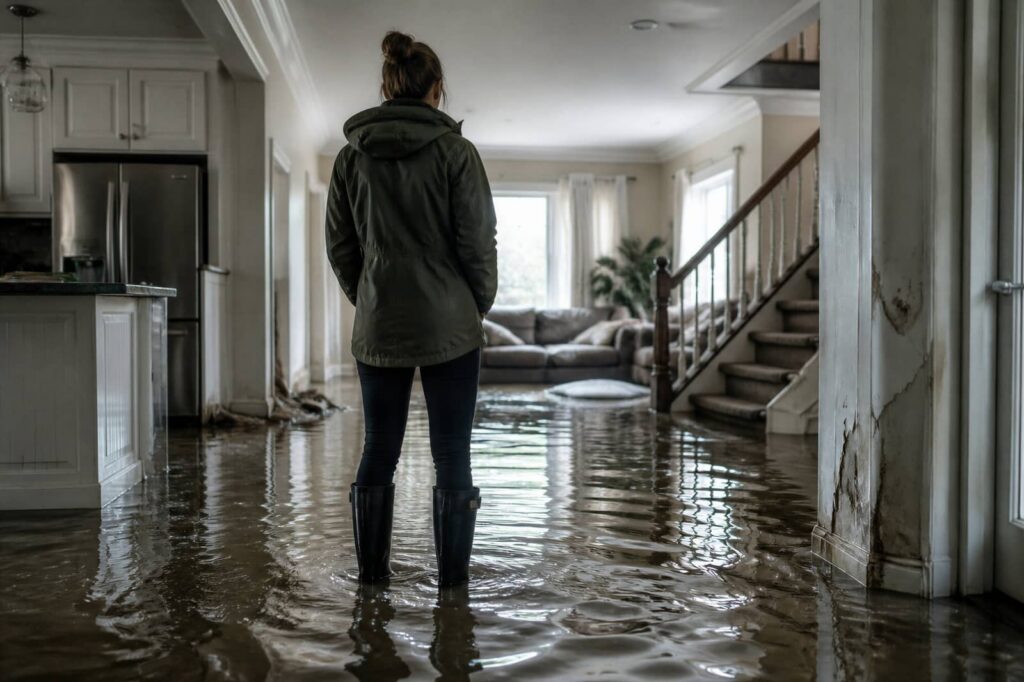
After a burst pipe soaks your hallway, you may think it’s the same problem as a flooded basement after a storm, but it isn’t. Understanding Flood Damage vs Water Damage can help you identify the right cleanup methods, drying timelines, repair scopes, and insurance considerations based on where the water came from. If you own property, knowing that source can change your next move in a major way, and the distinction matters more than you might expect.
Key Takeaways
- Flood damage comes from external surface water; water damage usually comes from internal sources like burst pipes or leaks.
- Floodwater is often contaminated, so cleanup requires containment, removal, disinfection, and thorough drying.
- Water damage is usually more localized, allowing faster isolation, drying, and material removal.
- Insurance coverage differs: floods often need separate flood insurance, while plumbing leaks may fall under homeowners policies.
- After damage, stop the source safely, shut off electricity, document everything, and call a restoration professional quickly.
What’s the Difference Between Flood Damage and Water Damage?
Flood damage and water damage aren’t the same, and the distinction affects cleanup, drying, repairs, and insurance claims.
When you compare flood damage vs water damage, you’re really looking at the water’s source and entry path. Flood damage usually comes from external surface water that covers at least two acres or affects multiple properties, such as storm surge, river overflow, or heavy runoff.
Water damage often starts inside your property, from a burst pipe, leaking appliance, roof intrusion, or sewer backup. You can usually trace water damage to a specific system or failure, while flood damage involves broader environmental exposure.
That difference matters because insurers and restoration teams classify risk, scope, and coverage differently. When you know the category, you can make faster, smarter decisions together.
How Flood Damage Affects Cleanup and Drying
Because floodwater usually carries soil, sewage, chemicals, and other contaminants, cleanup has to start with containment, removal, and disinfection rather than simple drying. You’ll need a structured approach that protects your team and keeps contamination from spreading.
- Stop access to affected rooms
- Remove standing water fast
- Bag debris and porous waste
- Clean hard surfaces with disinfectant
- Run dehumidifiers after sanitation
You can’t rely on air movement alone, because saturated materials hold moisture deep inside and can keep releasing it back into the space.
As a property owner, you’ll benefit from treating the site as a controlled recovery zone, where each step builds on the last. That process helps your property return to a safe, stable condition and keeps you aligned with a professional restoration plan you can trust.
Why Water Damage Repairs Differ
Water damage repairs differ from flood recovery because the source is usually cleaner, less contaminated, and more predictable. This allows you to often focus on drying, removal, and rebuilding instead of full-scale decontamination.
You’ll usually work with localized issues like burst pipes, appliance leaks, or roof intrusion, which lets you isolate affected materials faster. That means your team can measure moisture, remove compromised drywall, and salvage structural elements with more precision.
You also get clearer repair scopes, since damage often stays within one building system or room. When you act quickly, you reduce hidden deterioration, limit mold growth, and restore your property with less disruption.
If you’re managing the process, you’re not alone; a coordinated, methodical approach helps you protect your space and move forward confidently.
How Insurance Covers Flood vs Water Damage
Insurance coverage often follows the same distinction as the cleanup process: the cause of the loss determines what your policy may pay for. You’ll usually see different treatment for flood and water damage, so read your policy closely and know where you stand with your coverage team.
- Flood damage often needs separate flood insurance.
- Water damage from plumbing may fall under homeowners coverage.
- Sewer backup usually requires an added endorsement.
- Gradual leaks can face exclusions if you ignored maintenance.
- Wind-driven rain may be covered differently than rising water.
Your claim depends on documentation, policy language, and the source of intrusion.
When you understand these limits, you can speak confidently with your insurer and protect your property with your community.
First Steps After Flood or Water Damage
As soon as you notice flooding or water intrusion, your first priority is to stop the source if it’s safe, shut off electricity to affected areas, and document the damage with clear photos and notes.
Next, protect yourself and your team by wearing gloves, boots, and a mask before entering soaked spaces. Move furniture, rugs, and valuables to a dry area, then remove standing water with pumps, wet vacuums, or towels.
Open windows and run fans only when electrical systems are safe. Contact a qualified restoration professional promptly, because fast drying limits structural loss and microbial growth.
Keep damaged materials separated for inspection, and save receipts for emergency expenses. Acting quickly helps your property recover and keeps you aligned with your insurer’s expectations.
Frequently Asked Questions
Can Mold Start Growing Before Cleanup Begins?
Yes, mold can start growing within 24 to 48 hours after moisture exposure, especially in warm, humid areas. You should begin drying, removing wet materials, and improving airflow right away to limit contamination and damage.
How Do I Document Damage for Insurance Claims?
You should document damage like a careful cartographer charting a storm-torn city: photograph every angle, list affected items, record dates, save receipts, and notify your insurer promptly so you’ll strengthen your claim and recovery.
What Safety Hazards Should I Avoid After Water Intrusion?
You should avoid electrical shock, contaminated water, slippery surfaces, mold growth, structural collapse, and gas leaks. Shut off utilities, wear protective gear, and keep everyone out until you’ve confirmed the area’s safe.
When Should I Call a Restoration Professional?
You should call a restoration professional immediately if you’ve got standing water, soaked materials, hidden moisture, mold growth, or electrical risks. You’ll protect your property, reduce losses, and speed safe, effective recovery.
Can I Stay in My Home During Drying and Repairs?
You can sometimes stay, but only if drying equipment, repairs, and damaged areas don’t create hazards. You’ll need safe access, clean air, and intact utilities. Your restoration professional should confirm it’s okay.
Conclusion
You may see both as “water problems,” but flood damage and water damage aren’t the same. Floodwater rushes in from outside, often bringing contaminants, widespread cleanup, and stricter insurance limits. Water damage usually starts inside your property, making repairs more targeted and drying more controlled. If you know the source fast, you can act faster, file the right claim, and protect your property more effectively.