
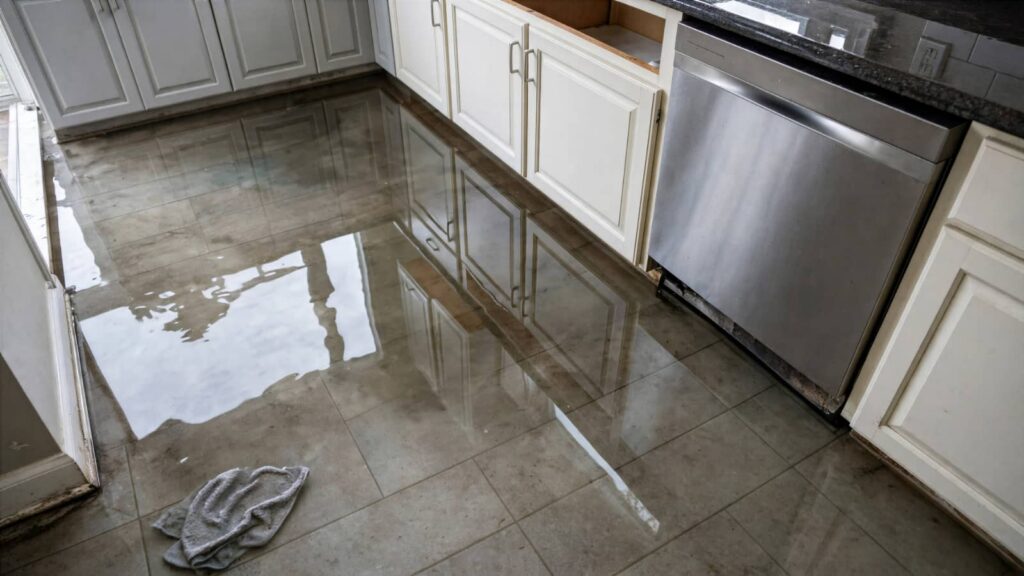
When Water Damage From an Appliance Leak happens, your dishwasher can turn the floor into a spill map in minutes. You need to shut off the water, stop the spread, and clear standing water fast. Then you’ll check floors, cabinets, walls, and subfloors for hidden moisture before mold or warping starts. The first 15 minutes matter most, but knowing what to dry and when to call a pro makes all the difference.
Key Takeaways
- Shut off the appliance’s water source and unplug nearby devices if it is safe to do so.
- Remove standing water quickly with towels, a wet vac, or a bucket.
- Move rugs, boxes, and other items away from the leak to prevent further damage.
- Check floors, baseboards, cabinets, and walls for hidden moisture, swelling, or soft spots.
- Call a water damage professional if water entered walls, cabinets, or a large area.
What to Do in the First 15 Minutes After a Leak?
In the first 15 minutes after a leak, shut off the water source and unplug any nearby appliances if it’s safe to do so.
Then assess the area for water damage from appliance leak and note where moisture is visible. Move small, dry items away from the affected zone, but don’t walk through standing water if electrical risk exists.
Use towels or a wet vac to remove accessible water, and start ventilation by opening doors or windows.
Check the appliance’s hose, valve, or connection for obvious failure, but don’t disassemble it. If you’re unsure, contact a qualified technician and your property manager or insurer.
Quick action helps your team limit cleanup needs and protect flooring, cabinets, walls, and subfloors.
How Do You Stop Water Damage From Spreading?
Once you’ve shut off the source and cleared the immediate area, contain the water so it can’t travel farther into flooring, cabinets, walls, or subfloors.
Move absorbent towels, mops, or socks around the leak’s edge to form a barrier. Pull rugs, boxes, and loose items away so they don’t wick moisture outward.
If water is pooling, use a wet vac or bucket to remove it from the lowest point first.
Check nearby baseboards and cabinet toe kicks for dampness, and keep doors, drawers, and panels open enough to reduce trapping.
Place fans to push air across the wet zone, but don’t blast water into adjacent rooms.
Stay alert for seepage at seams, edges, and cracks. Acting fast helps your crew stop spread and protect the whole space.
How to Clean Up Floors and Cabinets After an Appliance Leak?
Start by removing standing water and lifting any items that trap moisture. Then clean the affected floors and cabinet surfaces with a mild detergent and clean water.
Use a microfiber mop or soft cloth, and work from the least dirty area to the most contaminated. Rinse lightly so you don’t leave residue, then dry each section with towels.
For cabinets, wipe shelves, faces, and toe kicks. Then open doors and drawers to let air move through. Remove drawer liners if they’re damp.
Pay attention to seams, edges, and hardware where grime collects. If you see swollen finish, peel-up laminate, or sticky buildup, clean again and dry thoroughly.
You’re doing the right thing by acting quickly and keeping the space sanitary and ready for the next step.
How Do You Know When Walls and Subfloors Need Drying?
Walls and subfloors need drying when water has soaked beyond the surface, which you can often tell by darkened drywall, soft or swollen baseboards, musty odors, damp insulation, buckling flooring, or a spongy feel underfoot.
You should also check whether paint is bubbling, seams are separating, or trim is loosening near the leak path. If you press on the wall and it gives, moisture has likely moved inside.
In unfinished spaces, look for wet joists, stained framing, or persistent coolness. Use a moisture meter if you have one, and compare wet areas with dry sections nearby.
If readings stay elevated after surface water is gone, the wall or subfloor still needs drying. Acting early helps your home recover cleanly and keeps your repair effort on track.
When Should You Call a Water Damage Pro?
Call a water damage pro when the leak has reached hidden spaces, affected a large area, or left you unsure how far the moisture traveled.
You need help if water got under cabinets, into wall cavities, or beneath flooring, because those areas trap moisture and can lead to rot or mold.
Call sooner if the appliance leaked for hours, the drywall feels soft, or the subfloor still reads wet after you dry the surface.
You also want a pro when you see swelling, musty odors, or electrical outlets near the wet zone.
A certified team can map moisture, remove damaged materials, and dry the structure with the right equipment.
That gives you a safer, faster path back to a home that feels normal again.
Frequently Asked Questions
How Do You Find Hidden Leak Sources Inside an Appliance?
You find hidden appliance leaks by unplugging it, removing panels, and inspecting hoses, valves, seals, pumps, and drip trays for moisture, corrosion, or stains. Use a flashlight, paper towels, and run cycles while watching closely.
Can Appliance Leak Water Damage Void Your Home Insurance Claim?
Yes, it can, if you’re negligent; that’s the lock on the door. You’ll usually keep coverage when you report fast, document damage, and maintain appliances—like a 2023 claim where prompt drying preserved payout.
How Long Does Mold Take to Grow After Appliance Water Exposure?
Mold can start growing within 24 to 48 hours after appliance water exposure, especially in warm, humid conditions. You should dry affected materials fast, remove soaked items, and ventilate the area immediately.
Should You Replace Wet Insulation After an Appliance Leak?
Yes, you should usually replace wet insulation after an appliance leak because it traps moisture, loses performance, and grows mold. You’ll avoid hidden damage by removing soaked insulation, drying cavities, and inspecting adjacent materials promptly.
What Safety Risks Exist With Electrical Outlets Near Standing Water?
Like a live wire in dark water, outlets near standing water can shock you, arc, and start fires. You’ll protect yourself by cutting power, avoiding contact, and calling a licensed electrician promptly.
Recap
So, after the leak’s dramatic debut, you get to play hero: shut off the water, stop the spread, dry everything fast, and inspect the hidden stuff before mold auditions for a permanent role. If floors, cabinets, walls, or subfloors stay damp, don’t pretend they’ll “air out.” Call a water damage pro before a small appliance tantrum turns into a costly structural comedy.