
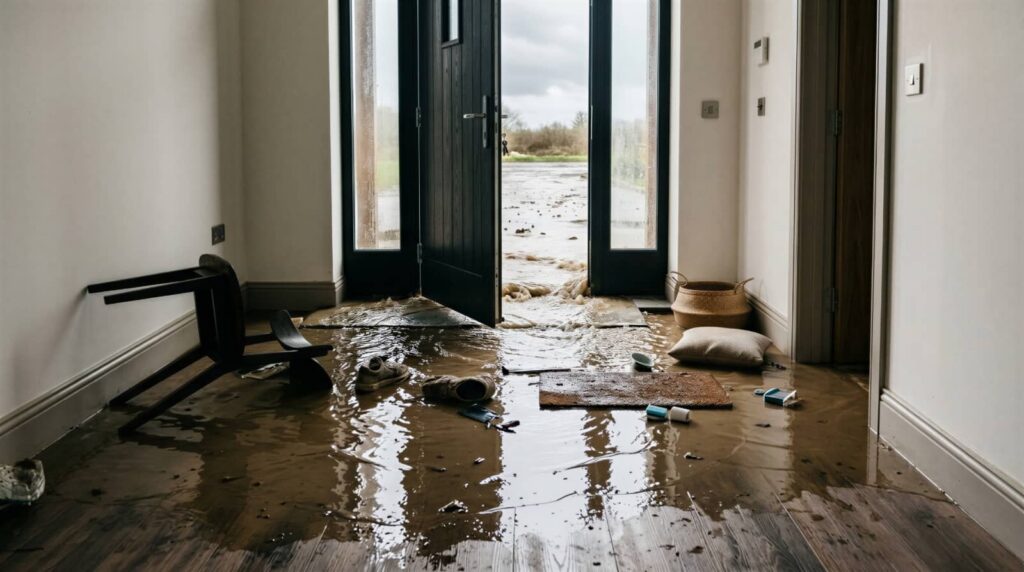
When water starts spreading, you need to act fast: shut off the source, move furniture and valuables to dry areas, and begin removing standing water with buckets or a wet vac. Then set up airflow, check walls and flooring for hidden moisture, and photograph everything for your insurer. If the damage is extensive or you suspect mold, you’ll want a licensed cleanup team before the problem gets worse.
Key Takeaways
- Shut off the water source immediately and stop the leak if possible.
- Remove standing water with towels, a wet/dry vacuum, or a sump pump.
- Move furniture and electronics to dry areas and protect nearby belongings.
- Document all damage with photos and notes before discarding anything.
- Call a 24/7 licensed water damage cleanup team right away, especially if contamination or mold is possible.
Stop the Leak and Protect Your Home
First, stop the water at its source so the damage doesn’t spread. Find the shutoff valve for the sink, toilet, appliance, or main line, and turn it clockwise.
If a burst pipe is spraying, use a towel or clamp to slow it while you act. Then move nearby furniture, rugs, and electronics to a dry area.
Protect shared spaces by placing aluminum foil or plastic under furniture legs and by lifting items onto blocks or folded towels.
Remove standing water with buckets or a wet vacuum if you can do it safely. Open windows for airflow, and keep children and pets away from the area.
These emergency water damage cleanup steps help you take control fast and protect the home you share.
Call a Water Damage Cleanup Team
Once you’ve stopped the leak and protected the area, call a water damage cleanup team right away. Share the source of water, how long it’s been present, and which rooms are affected.
Ask for 24/7 response, licensed technicians, and clear pricing so you know what’s coming next.
When the crew arrives, let them inspect the damage, document conditions, and explain the plan before work begins. You’re not handling this alone; a solid team keeps you informed and helps you feel supported.
Confirm they’ll coordinate with your insurance provider and protect belongings that can be saved.
If the water came from a contaminated source, tell them immediately so they can use the right safety measures. Fast professional help limits uncertainty and gets your home back on track.
Remove Standing Water Fast
Pump out or soak up standing water as quickly as possible to reduce further damage. First, shut off the source if you can do so safely.
Then use a wet/dry vacuum, sump pump, mop, or towels to remove water from floors, corners, and low spots. Work from the edges toward the center so you don’t spread it. Empty collected water often and keep the path clear so you can move efficiently.
If the water is deep, rising, or contaminated, step back and let your cleanup team handle it. You’re not alone in this process; fast action helps your space recover sooner.
After the visible water is gone, check for trapped moisture in seams and under baseboards, because hidden water can keep causing damage.
Move Furniture and Protect Dry Items
Start by clearing furniture out of the wet area so moisture can’t wick into legs, frames, or upholstery.
Next, lift dry items onto a clean, elevated surface to keep them isolated from rising damp and residual leaks.
Then cover belongings with plastic sheeting or waterproof covers to shield them while you continue cleanup.
Clear Furniture Quickly
Move furniture out of the wet area as quickly as you can to reduce further damage and make room for cleanup.
Start with the largest dry pieces and guide them to a clean, stable space. Keep paths clear so you can move safely and avoid spreading water.
Cover nearby dry items with plastic sheeting or clean towels to shield them from splashes and dust. If a piece is already damp, set it aside separately so moisture doesn’t transfer to other surfaces.
Work in pairs when you can, since teamwork helps you stay steady and efficient.
Check for hidden water under rugs and furniture feet before you reset anything.
These simple steps protect your space, support your crew, and help everyone get through the cleanup together.
Lift Dry Items
Lift dry items first so you can protect unaffected surfaces and open up the work area for cleanup. Move lightweight furniture, boxes, and décor out of the wet zone, then set each item on a dry, stable surface.
If you can’t carry something safely, ask for help so you don’t strain yourself or spread water farther. Check the floor as you go; keep feet clear of slick spots and hidden debris.
Lift items straight up, not by dragging, to avoid scratching floors and pushing moisture into seams. Group belongings by room so you can return them faster later.
When you keep dry items together, you make the space easier to control, and you give your cleanup team room to work safely and efficiently.
Cover Belongings Safely
Once the dry items are out of the way, cover any remaining belongings with clean plastic sheeting or waterproof tarps to shield them from splashes, dust, and airborne debris.
Next, move lightweight furniture to a dry room if you can do so safely. For larger pieces, place blocks or foil under the legs to limit contact with damp flooring.
Keep electronics, rugs, paper goods, and fabric items off the ground and grouped together so you can check them quickly. Seal the covering at the edges, but leave enough space for air to circulate and reduce trapped moisture.
If you’re working with others, assign one person to hold, one to lift, and one to guide placement. That teamwork helps your space feel organized, protected, and under control.
Dry Walls, Floors, and Carpets Fast
Start drying walls, floors, and carpets right away to limit swelling, staining, and mold growth. Open windows if weather’s dry, then run fans to move air across wet surfaces.
Set a dehumidifier in the center of the room and close doors to trap moisture removal where you need it. Lift carpet edges so air reaches the pad, and blot, don’t rub, with clean towels.
For hardwood or laminate, wipe standing water quickly and separate boards with airflow, not heat. Remove baseboards only if they’re already loose, and keep furniture off damp areas using blocks.
Check surfaces every few hours; if materials still feel cool or soft, keep drying. You’re not alone here—steady airflow and patience help your space recover.
Document the Damage for Insurance
Before you move or discard anything, document the damage for your insurer. Start with wide shots of each room, then take close-ups of soaked walls, flooring, furniture, appliances, and visible stains.
Capture the water source, the spread path, and any warped or swollen materials. Use your phone’s date stamp, and keep the images in a dedicated folder.
Next, write a simple inventory: item name, location, brand, estimated age, and condition. Save receipts, warranty papers, and any prior photos you have.
If you’ve already removed water-damaged items, photograph them first and label each one. Back up everything to cloud storage or email it to yourself.
Clear records help your claim move smoothly, and they show you’re handling the loss carefully, together with your insurer.
Know When to Hand It to Pros
If you see structural sagging, widespread saturation, or electrical exposure, you should stop cleanup and call a water damage pro right away.
You also need professional help when moisture has soaked into drywall, insulation, or subfloors, because hidden mold can start growing fast.
A trained team can inspect, dry, and remediate the affected areas before the damage spreads further.
Severe Damage Signs
A few warning signs mean the damage has moved beyond basic cleanup and needs professional help.
First, check for sagging ceilings, warped floors, or walls that feel soft; these usually show water has soaked structural materials.
Next, look for repeated leaks, standing water you can’t remove, or electrical outlets that won’t stay dry.
Finally, notice if doors stick, baseboards swell, or cleanup keeps revealing new wet areas after you mop.
- Stop using the affected space.
- Shut off water if you can do it safely.
- Call a licensed restoration team.
When you act quickly, you protect your home and stay part of a community that handles problems early, calmly, and together.
Hidden Mold Risks
Even when surface water is gone, hidden moisture can keep feeding mold behind drywall, under flooring, and inside insulation.
You need to act fast: shut off the source, ventilate the area, and use a moisture meter if you have one.
Check baseboards, closets, and any warped materials for musty odors, staining, or soft spots.
If you see mold growth larger than a small patch, or if water sat for more than 24 to 48 hours, call a restoration pro.
They can remove contaminated materials, dry cavities, and test humidity safely.
You’re not overreacting—mold spreads quietly, and your crew’s help can protect your home and your people.
When you’re unsure, trust the signs and bring in trained support.
Frequently Asked Questions
How Soon Should I Shut off Electricity After Water Damage?
Shut off electricity immediately if water reaches outlets, wiring, or appliances. First, stay clear of wet areas, then switch off the main breaker if you can do it safely, and call a qualified electrician.
Can I Safely Stay in My Home During Cleanup?
No, not unless it’s declared safe; floodwater can hide shocks and mold like a silent storm. You should shut off utilities, move upstairs or out, and follow the cleanup crew’s safety instructions.
What Supplies Do I Need for Emergency Water Cleanup?
You’ll need gloves, boots, buckets, mops, towels, a wet/dry vacuum, fans, dehumidifiers, plastic sheeting, and disinfectant. Gather them first, then shut off power, remove standing water, and dry affected areas quickly and safely.
How Do I Tell if Water Is Contaminated?
You can tell water’s contaminated if it smells foul, looks cloudy, or came from sewage, floodwater, or a burst line—conveniently, nature’s greatest prank. Wear gloves, avoid contact, and call a pro.
Will Mold Start Growing Within 24 Hours?
Yes, mold can start growing within 24 hours if you leave moisture in place. You should dry surfaces fast, remove soaked materials, ventilate the area, and monitor hidden spaces so you keep your home safe.
Summary
When you need emergency water damage cleanup, act fast. Shut off the water, move valuables to dry areas, and remove standing water with a bucket or wet vac. Then dry walls, floors, and carpets as quickly as you can. Call a licensed cleanup team when the damage is too much to handle safely. Take photos for insurance, and keep ventilation going. Your home can recover, and with the right steps, you’ll stop the drip before it becomes a flood.