
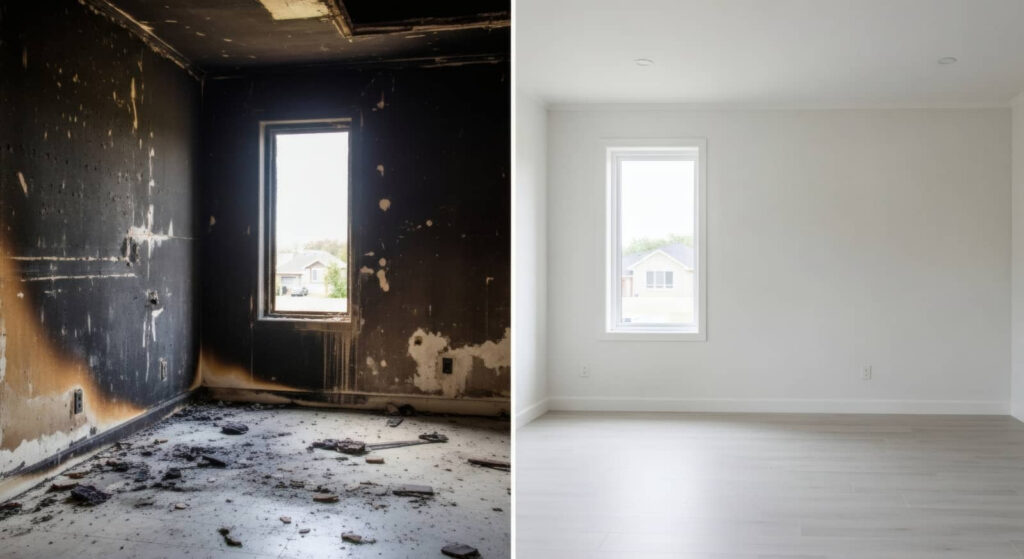
After the flames are out, the real damage can keep working in silence. Water damage after fire fighting can affect walls, floors, and hidden cavities quickly as water used to extinguish the fire soaks into the structure. If you don’t act quickly, moisture can weaken materials, invite mold, and complicate repairs. Understanding what’s at risk can help you protect your property before small losses become major ones.
Key Takeaways
- Water from firefighting can soak drywall, flooring, insulation, and contents, causing hidden damage beyond visible wet areas.
- Fast cleanup reduces swelling, warping, corrosion, odors, and the risk of mold or microbial growth.
- Moisture spreads through wall cavities, floors, and ceilings, so damage often extends farther than the fire scene suggests.
- Early drying and removal of wet materials improve the chances of saving structural components and belongings.
- Professional restoration teams use moisture checks, drying equipment, and safe cleanup methods to prevent further damage.
What Water Damage After a Fire Leaves Behind?
After firefighters put out a blaze, water can leave behind more damage than you might expect.
In water damage after fire fighting, you may see soaked drywall, swollen trim, warped flooring, and stained ceilings. Water can also settle inside insulation, cabinets, and furniture, weakening materials you rely on every day.
If soot mixed with moisture, surfaces can discolor and corrode, and hidden cavities may hold dampness you can’t see yet. You’re not alone in facing this; these effects are common after suppression efforts.
Inspect your home methodically, room by room, and note soft spots, sagging, rust, or musty odors. That careful assessment helps you understand what’s affected and where recovery starts.
Why Firefighting Water Needs Fast Cleanup
Firefighting water needs fast cleanup because standing moisture keeps spreading into porous materials and raises the risk of secondary damage.
You need prompt drying to protect drywall, flooring, insulation, and contents from swelling, staining, and deterioration. Quick removal also limits odors, corrosion, and the growth of microbes that can start in damp areas.
When you act early, you give your home the best chance to recover with fewer repairs and less disruption.
You’re not alone in this process; a skilled restoration team can assess moisture, set controlled drying equipment, and guide you through each step.
Fast cleanup helps stabilize the property, reduces uncertainty, and supports a safer return to normal.
How Firefighting Water Spreads Through Your Home
Firefighting water can move through your home along gravity, pipe chases, wall cavities, and floor assemblies, so damage often extends beyond the visible wet areas.
You may not see the full spread right away because water can wick into insulation, drywall, subflooring, and other porous materials.
A careful inspection helps you identify hidden moisture early and target drying where it’s needed most.
Water Pathways Through Structure
When crews extinguish a fire, the water doesn’t stay in one place; it travels through wall cavities, floor assemblies, ceilings, and open gaps around fixtures and framing.
In your home, gravity pulls runoff downward, while pressure can push it laterally along joists, pipes, and utility chases. You may see staining near the source, but water often migrates farther than you expect.
It collects under flooring, behind baseboards, and above ceiling panels, creating paths that connect rooms and levels.
We help you map those routes so you can act with confidence. By tracing how the water moved, you can protect your structure, reduce secondary damage, and restore a safe, familiar space for everyone who lives there.
Hidden Spread Into Materials
As that water moves through your home, it doesn’t just pass by surfaces—it gets absorbed into materials that hold moisture.
You may see dry drywall, but water can wick behind paint, into insulation, under flooring, and through trim joints. Porous materials act like reservoirs, trapping moisture where airflow can’t reach.
That hidden spread can soften gypsum, swell wood, corrode fasteners, and create conditions for microbial growth if you leave it untreated.
You don’t need to guess where it went; trained drying methods use moisture meters, thermal imaging, and targeted demolition to find it.
When you act quickly, you protect your structure and your peace of mind.
You’re not alone in this process—thorough cleanup helps your home recover safely and completely.
What Firefighting Water Can Ruin
Firefighting water can soak building materials like drywall, insulation, wood framing, and subflooring, leaving them weakened or warped.
It can also damage personal belongings, including furniture, electronics, clothing, and documents.
Quick drying and cleanup can limit further loss and help you recover more of what’s inside.
Soaked Building Materials
Water used to extinguish a fire can soak into drywall, insulation, framing, subfloors, and ceiling assemblies, weakening materials and creating conditions for mold and hidden deterioration.
You may not see the damage right away, but saturated gypsum swells, loses strength, and can crumble at joints. Wet insulation traps moisture against framing, slowing dry-out and increasing the chance of decay.
Subfloors can delaminate, and ceiling assemblies can sag or stain as water migrates through layers.
You need prompt drying, moisture mapping, and selective removal of compromised materials to protect structural integrity.
When you act quickly, you help your property recover more predictably and keep your space safe for everyone who belongs there.
Damaged Personal Belongings
Smoke, soot, and firefighting water can ruin personal belongings quickly, especially if you leave them in place after the fire is out. You can still protect many items if you act fast and sort them carefully.
Water wicks into fabrics, warps paper, corrodes metals, and drives odor into porous materials. Handle each item with clean gloves and keep damaged belongings separate from salvageable ones.
- Photograph everything before moving it
- Air-dry textiles and paper immediately
- Rinse metal objects to stop corrosion
- Bag soot-covered items to contain residue
- Save electronics for professional evaluation
You’re not alone in this process. A timely inventory and targeted cleanup can reduce loss, preserve family items, and help you reclaim what matters most with confidence.
Signs of Hidden Water Damage After a Fire
After a fire, hidden moisture can linger behind walls, under floors, and above ceilings even when surfaces look dry. You might notice musty odors, peeling paint, warped trim, stained drywall, or soft spots in flooring.
You may also see condensation on windows, discoloration around baseboards, or ceilings that sag slightly. If doors stick or floors feel uneven, trapped water may be changing materials.
In some homes, you’ll hear faint cracking or see bubbling wallpaper as damp layers shift. Don’t dismiss these clues as minor; they often signal moisture inside assemblies.
When you recognize them early, you protect your space, your belongings, and your peace of mind. You’re not alone in this—these signs are common after firefighting, and they deserve prompt attention.
How Professionals Dry and Restore Water Damage
Professionals start by mapping the damage, removing standing water, and setting up controlled drying to stop moisture from spreading through walls, floors, and ceilings.
You’ll see them place air movers and dehumidifiers to create balanced airflow and pull vapor from structural cavities. They test materials, track moisture readings, and adjust equipment until levels return to safe targets.
- Inspect hidden spaces
- Extract trapped water
- Dry framing and finishes
- Sanitize affected surfaces
- Restore damaged materials
You’re not left guessing; the process stays measured and documented.
Crews can also protect salvageable contents and coordinate repairs so your space feels whole again.
With careful drying and restoration, you regain a stable, clean environment that supports your home and the people in it.
What Happens If You Delay Cleanup
If cleanup waits too long, water from firefighting can keep soaking walls, floors, ceilings, and contents, pushing moisture deeper into hidden cavities and making damage harder to reverse.
You’ll also see humidity rise, which can swell wood, weaken drywall, and corrode metal fasteners and wiring.
As moisture lingers, stains, odors, and microbial growth can spread, turning a manageable loss into a broader structural and indoor-air problem.
Delays can also complicate documentation because surfaces change and contents deteriorate further.
Acting quickly helps you protect the parts of your space that still belong to you and keeps the recovery process more predictable.
You’re not overreacting when you move fast; you’re limiting secondary damage and preserving more of the property’s original condition for a steadier, safer return.
How to Handle Water Damage After a Fire
First, make the scene safe by confirming the fire’s out, the structure isn’t in immediate danger, and utilities are handled before you touch wet materials.
Then you can start controlled cleanup. Remove standing water fast, because saturation spreads into walls, floors, and contents. Open windows if conditions allow, and set fans and dehumidifiers to move air and lower humidity.
- Photograph damage for records
- Separate salvageable items from ruined ones
- Lift rugs and baseboards to expose hidden moisture
- Bag wet debris to reduce contamination
- Call certified restoration help if odors, soot, or swelling persist
You’re not alone here; a methodical response protects your space and helps your home recover cleanly.
Frequently Asked Questions
How Long Does Fire-Related Water Damage Take to Cause Mold?
Mold can begin growing in 24 to 48 hours after fire-related water damage if you don’t dry materials quickly. You can reduce risk by removing moisture, improving airflow, and inspecting hidden spaces promptly.
Can Fire Sprinkler Water Damage Electrical Systems?
Yes—fire sprinkler water damage can short electrical systems. Like a soaked circuit board failing quietly, moisture corrodes wiring and trips breakers. You should shut power off, then have a licensed electrician inspect, dry, and test everything.
Should I Remove Wet Insulation After Firefighting?
Yes, you should remove wet insulation after firefighting if it’s soaked or contaminated. You’ll prevent hidden mold, odor, and loss of thermal performance. Work with your restoration team so you’re protected and supported.
Does Firefighting Water Affect Air Quality Indoors?
Yes, firefighting water can affect your indoor air quality by raising humidity and encouraging mold, bacteria, and hidden contaminants. You should dry affected areas quickly, ventilate well, and inspect materials so your home stays safe and healthy.
Can Insurance Cover Both Fire and Water Restoration?
Yes, you can often have insurance cover both fire and water restoration if your policy includes covered perils. You’ll want to document damage, notify your insurer quickly, and work with approved restoration professionals.
Recap
After a fire, you need to treat firefighting water as an urgent restoration issue, not a minor cleanup job. It can soak insulation, weaken materials, and create hidden mold if you wait. You might think the property looks dry enough, but moisture often remains behind walls and under flooring. Act quickly, document damage, and bring in professionals to dry, inspect, and restore the space before small losses turn into costly structural problems.