
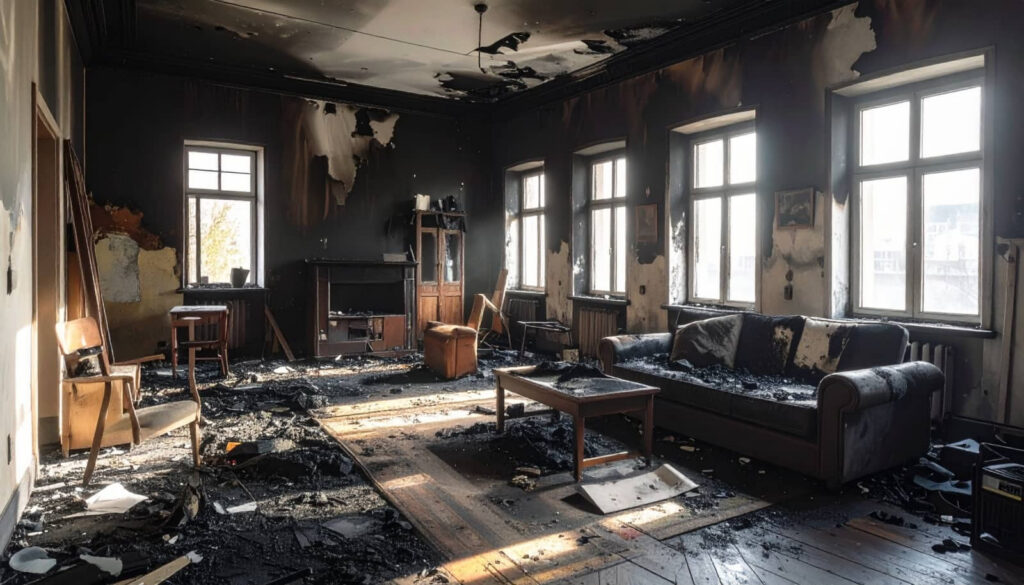
After a fire, you’re often left with a stubborn aftereffect that won’t simply fade on its own. Smoke odor removal starts with deep cleaning, including HEPA vacuuming all surfaces, washing hard materials with detergent, and treating porous items with targeted deodorization. Smoke particles can cling to walls, fabrics, and furniture, so using the right cleaners and air scrubbers matters. If the odor still lingers, professional restoration can make the difference.
Key Takeaways
- Start with HEPA vacuuming and detergent cleaning of all affected surfaces, especially carpets, vents, drapes, and hidden ledges.
- Remove smoke residue from top to bottom, cleaning porous materials carefully because they trap odor deep inside.
- Launder washable fabrics with enzyme detergent; discard items that retain strong smoke smells after cleaning.
- Test painted drywall and other delicate surfaces in a small area before full cleaning to prevent damage.
- Call restoration professionals for severe damage, since wall cavities, insulation, and ductwork may need specialized deodorization.
Start Smoke Odor Removal With Deep Cleaning
Start with a deep cleaning to remove the smoke residue that keeps odors trapped in your home. You’ll need to vacuum carpets, drapes, vents, and upholstery with a HEPA filter, then wash hard surfaces with a detergent solution.
Focus on areas near ceilings, trim, and hidden ledges, because fine soot settles there. Launder fabrics that can handle water, and discard items that hold persistent residue.
If you’re tackling smoke odor removal after fire, clean each room methodically so you don’t spread contamination. Wipe from top to bottom, changing cloths often, and use separate tools for each zone.
This approach helps you reclaim a fresher space and supports your home’s recovery.
What Causes Smoke Odor to Linger?
Smoke odor lingers because porous materials like drywall, insulation, fabrics, and wood can absorb smoke particles deep into their surfaces.
You’ll also find that soot and residue coat walls, vents, and hidden cavities, which keeps releasing odor over time.
When you understand where the smoke has settled, you can target cleaning and deodorizing more effectively.
Porous Material Absorption
When smoke reaches porous materials, it seeps into tiny openings and binds to fibers, drywall, insulation, upholstery, and wood, which makes the odor much harder to remove.
You’re not imagining the persistence; these materials act like reservoirs, slowly releasing trapped compounds back into the air.
Because the odor penetrates below the surface, quick surface cleaning won’t fully solve it. You’ll need targeted treatment that reaches deep into the material, along with ventilation and controlled drying to reduce what remains inside.
In many homes, the strongest smells come from fabrics and unfinished wood, where internal voids hold odor molecules longer.
If you address these materials early, you improve your chances of restoring a fresh, comfortable space that feels like home again.
Soot And Residue
Even after the flames are out, soot and residue can keep smoke odor hanging in the air because they cling to surfaces and continue releasing odor-causing compounds over time.
You’re dealing with a fine mix of carbon, oils, and partially burned materials that settles on walls, ceilings, HVAC parts, and hidden cavities.
When you touch or disturb it, you can re-aerosolize those particles and spread odor again.
Greasy residue also bonds tightly to paint, fabric, and wood, so simple airing out won’t solve it.
You need thorough dry and wet cleaning, plus targeted deodorization, to break that cycle.
When you treat every affected surface, you restore a cleaner, safer space that feels like yours again, not a reminder of the fire.
Clean Walls, Ceilings, and Floors
Start by washing walls, ceilings, and floors with a cleaner that’s safe for the affected surface, since soot and smoke residue can keep releasing odor long after the fire is out.
You’ll get better results if you work from the top down, using microfiber cloths, soft sponges, and clean rinse water to lift contaminants instead of spreading them.
For painted drywall, test a small area first so you don’t dull the finish.
On tile, sealed wood, or concrete, scrub grout lines, corners, and baseboards where odor-causing particles settle.
Change wash water often, and dry each section completely to prevent moisture-related smells.
When you clean thoroughly, you help your home feel safer, fresher, and ready for the next step in recovery.
Treat Furniture and Fabrics
Next, treat furniture and fabrics to remove smoke odor trapped deep in fibers and padding. You’ll need to vacuum upholstered pieces with a HEPA tool, then clean each surface using the manufacturer’s care code.
Test hidden areas first so you don’t set stains or damage finishes. For washable slipcovers, curtains, and throws, launder them with an enzyme detergent and dry them completely.
For nonwashable cushions, mattresses, and rugs, apply a fabric-safe deodorizing treatment and work it into the material with a soft brush. Let each item dry in moving air so moisture doesn’t lock in odor.
If smoke reached the filling, repeat the process until the smell fades. You’re restoring comfort, and your space can feel like yours again.
Choose the Right Deodorizers and Air Scrubbers
Once furniture and fabrics are cleaned, you can target the smoke that’s still hanging in the air and embedded in porous surfaces with the right deodorizers and air scrubbers.
Choose odor-neutralizing products that match the residue type: enzyme-based formulas help with organic soot, while hydroxyl or ozone-free oxidizers reduce stubborn smells without leaving heavy perfume.
Place HEPA air scrubbers in closed rooms so they recirculate air, capture fine soot, and lower particulate load. Run fans only if they don’t spread odor to clean areas.
You’ll get better results when you combine source control, ventilation, and continuous filtration. Check filters often and replace them as needed.
When Smoke Odor Needs Professional Restoration
If smoke odors keep returning after cleaning, you’re likely dealing with persistent contamination in porous materials and hidden soot damage behind walls, above ceilings, or inside HVAC pathways.
When fire exposure was severe, the odor can bind deeply to structural components and require professional restoration equipment and methods to fully treat it.
A trained team can assess the affected areas, remove residue, and apply targeted deodorization so you’re not left with lingering smoke.
Persistent Smoke Odors
When smoke odor lingers after fire damage, it often means the source has penetrated deeper than surface debris and now requires professional restoration.
You can scrub visible residue, but trapped odor molecules keep releasing into the air and making your home feel unsafe.
Professionals use targeted cleaning, deodorizing agents, and material-specific treatments to neutralize those compounds, not just mask them.
They also assess porous finishes, textiles, and HVAC pathways that can recirculate odor after basic cleanup.
When you bring in restoration help, you’re choosing a team that understands the science and respects your space.
That support helps you regain comfort faster, reduce guesswork, and move back into a cleaner, healthier environment with confidence and a sense of belonging.
Hidden Soot Damage
Hidden soot damage often hides inside wall cavities, insulation, ductwork, and other low-visibility areas, so a room can look clean while odor-causing residue still lingers.
You may notice that wiping surfaces doesn’t solve the smell because fine particles keep off-gassing from concealed spaces. Professional restoration helps you identify and treat those hidden sources with targeted methods.
- Inspect hidden pathways with thermal and visual tools.
- Remove residue from porous materials and mechanical systems.
- Apply deodorization after thorough cleaning to stabilize indoor air.
When you work with a trained team, you’re not guessing alone.
You get a clear plan, careful containment, and measurable progress that helps your home feel safe, familiar, and livable again.
Severe Fire Exposure
Severe fire exposure can saturate drywall, framing, insulation, fabrics, and HVAC components with smoke residue that household cleaning can’t fully remove.
When smoke reaches porous materials, it bonds with microscopic particles and acids, so odors keep returning even after surface wiping. You may notice persistent soot, staining, and a sharp smell that worsens in humidity or heat.
Professional restoration teams use thermal fogging, hydroxyl or ozone treatment, HEPA vacuuming, and deep cleaning to target both visible contamination and hidden residue.
They also inspect ductwork, cavities, and salvageable contents to prevent recontamination.
When the damage is widespread, you don’t have to handle it alone; trusted experts can restore safer, cleaner indoor air and help your home feel like yours again.
Prevent Smoke Odor From Coming Back
To keep smoke odor from coming back, you’ll need to address the source materials, not just the air. You can protect your space by sealing porous surfaces, removing residues, and controlling humidity so particles don’t reactivate.
- Clean walls, ceilings, and HVAC components with smoke-safe detergents and HEPA vacuuming.
- Seal damaged drywall, subflooring, and framing after they’re fully dry, or replace them if contamination remains.
- Maintain filtration with new furnace filters and portable HEPA units while monitoring for musty or smoky notes.
When you stay consistent, you reduce hidden reservoirs that trap odor. You’re not just restoring a room; you’re rebuilding a healthier home where your family can breathe easier and feel settled again.
Frequently Asked Questions
How Long Does Smoke Odor Removal Usually Take?
You’ll usually need a few hours to several days, depending on smoke severity, materials, and airflow. You can speed results with thorough cleaning, deodorizing, and targeted treatment, but stubborn odors may take longer.
Can Smoke Odor Affect Indoor Air Quality Long-Term?
Yes—if you let it, smoke odor can haunt your indoor air like an invisible storm cloud. You’ll improve air quality with thorough cleaning, ventilation, and deodorizing, because lingering particles can keep irritating your lungs.
Is It Safe to Stay in a Smoke-Damaged Home During Cleanup?
Usually, you shouldn’t stay if you notice soot, strong odor, or respiratory symptoms; you’ll breathe irritants and risk exposure. You can remain only if cleanup’s minimal, ventilation works, and professionals confirm air safety.
Will Insurance Cover Smoke Odor Removal Costs?
Usually, yes—if your policy covers fire damage, you’ll likely get help for odor removal too. You’ll need documentation, timely claims, and approved remediation; think of coverage as a safety net, not a blank check.
Can Electronics Retain Smoke Odor After a Fire?
Yes, your electronics can retain smoke odor after a fire because fumes seep into vents, boards, and plastics. You’ll need careful cleaning, professional deodorizing, and testing before using them again safely.
Summary
Smoke odor after fire damage won’t politely leave on its own; it clings like an uninvited guest with a smoke machine. But if you vacuum with HEPA filtration, scrub hard surfaces, treat fabrics carefully, and use the right deodorizers and air scrubbers, you’ll strip out the hidden residue. When the smell’s stubborn, call in restoration pros. You’ll reclaim cleaner air, safer spaces, and a home that smells like yours again, not yesterday’s disaster.