
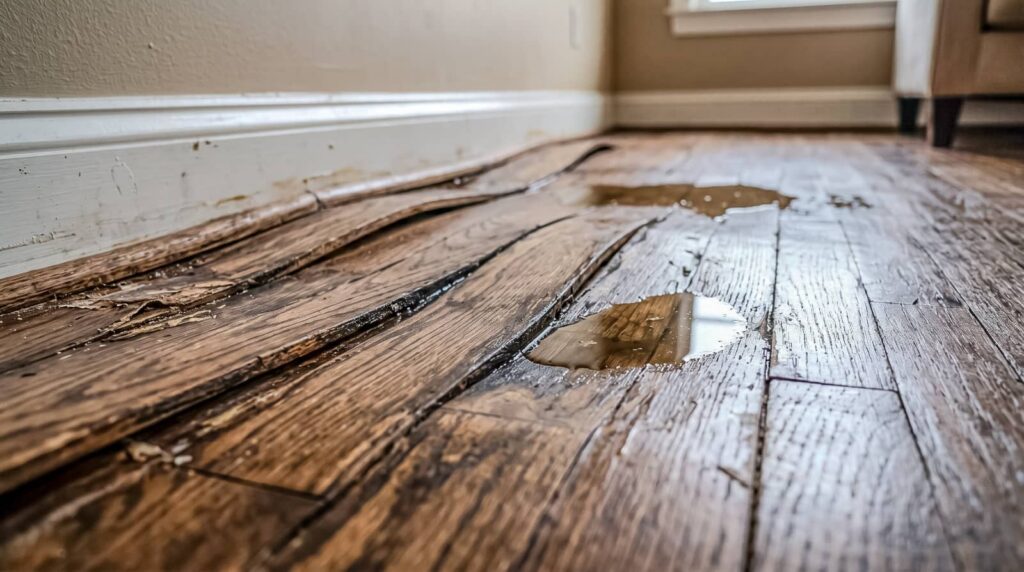
You may not see hidden water damage at first, but you can often catch it by checking for musty odors, yellow or brown stains, peeling paint, soft spots in floors, warped baseboards, or damp drywall. Uneven flooring and buckling tiles can also point to moisture trapped behind surfaces. Mold can be another clue. The tricky part is knowing when these signs are minor and when they signal a bigger problem just out of view.
Key Takeaways
- Warped baseboards, soft spots, or spongy floors often indicate hidden moisture behind walls or under flooring.
- Musty odors in rooms, attics, or basements can signal water damage inside walls or enclosed spaces.
- Yellow, brown, or rust-colored stains and peeling paint often point to leaks trapped behind drywall.
- Buckling tiles, cupped wood, or lifting laminate suggest moisture has spread beneath the floor.
- Visible mold, dark spots, or recurring dampness warrant a prompt inspection for hidden leaks.
Signs of Hidden Water Damage
Hidden water damage often shows up in subtle ways before you see any obvious leaks. You might notice warped baseboards, soft spots underfoot, or drywall that feels damp when you press it.
These signs of hidden water damage can appear after plumbing failures, roof intrusion, or poor sealing around windows and floors. If you belong to a home where rooms feel uneven or materials seem weaker than usual, trust that feeling and inspect closely.
Look for discoloration, bubbling finishes, and changes in texture along walls and flooring. You can reduce costly repairs by acting early, because moisture spreads behind surfaces and weakens structure over time.
When the clues persist, schedule a professional inspection so you’re not dealing with damage alone.
Musty Odors, Stains, and Peeling Paint
A musty odor is often one of the earliest clues that moisture has collected where you can’t see it, especially in attics, basements, crawl spaces, or behind walls. You may notice the smell grows stronger after rain or when HVAC systems run.
Check for yellow, brown, or rust-colored stains on ceilings, drywall, and trim, since they often point to repeated leakage. Peeling, bubbling, or cracking paint can also signal trapped moisture beneath the surface.
When you spot these changes together, don’t dismiss them as aging materials; they usually show a problem that needs attention. You belong to a group of homeowners who can catch hidden damage early by trusting these subtle warnings and arranging a prompt inspection before the issue spreads.
Soft Floors, Warped Wood, and Buckling Tiles
When moisture lingers beneath flooring, you may notice soft or spongy spots that flex underfoot, especially near sinks, tubs, windows, or exterior walls.
If hardwood starts to cup, crown, or gap, the boards may be absorbing water unevenly. You might also see laminate edges lifting or tile sections sounding hollow when you walk across them.
Buckling happens when trapped moisture expands the material, pushing seams upward or shifting tiles out of place. These changes often worsen over time, so don’t assume they’ll settle on their own.
Check adjacent baseboards, nearby grout lines, and the underside of cabinets for related movement.
If you live with these signs, you’re not alone; they often point to a hidden leak that needs prompt inspection before the damage spreads further.
Mold and Other Warning Signs
Musty odors and visible mold often show up after flooring problems, especially if moisture has been trapped for a while. You may notice dark spots along baseboards, in corners, or under rugs, and the growth can spread into nearby materials.
Watch for peeling paint, discolored drywall, swollen trim, or faint staining that returns after cleaning. These signs often travel together, telling you moisture is still present behind surfaces.
You might also feel persistent dampness underfoot or see condensation where rooms stay closed off. Trust what you observe; hidden water damage rarely stays quiet for long.
When to Schedule an Inspection
Schedule an inspection as soon as you notice any combination of odors, stains, soft flooring, peeling paint, or mold, since these signs often point to moisture that’s still active behind the surface.
You shouldn’t wait for damage to spread, because hidden leaks can weaken framing, flooring, and insulation fast. If a recent storm, plumbing issue, roof leak, or appliance failure occurred, book an assessment right away, even when the area seems dry.
You’ll get a clearer picture of the problem, and you’ll feel more confident making the next repair. If the symptoms return after cleaning or drying, that’s another strong signal that moisture remains.
A prompt inspection helps you protect your home, avoid larger costs, and stay connected to a community that values safe, well-kept spaces.
Frequently Asked Questions
How Can Hidden Water Damage Affect Indoor Air Quality?
Hidden water damage can worsen your indoor air quality by feeding mold, mildew, and bacteria, which release spores and odors. You might breathe irritated, polluted air, so you should inspect soon and fix leaks promptly.
What Tools Detect Moisture Inside Walls and Floors?
What’s best for you? You can use moisture meters, thermal cameras, and inspection scopes to detect dampness inside walls and floors. They help you spot leaks early, so you can protect your home and feel confident.
Can Hidden Leaks Raise My Utility Bill Noticeably?
Yes, hidden leaks can raise your utility bill noticeably because you’re paying for wasted water nonstop. If your bill jumps, check for odors, stains, soft flooring, peeling paint, or mold, and schedule an inspection.
Does Insurance Cover Water Damage Behind Walls?
Sometimes. You’ll usually get coverage if a sudden, accidental leak caused the damage, but not for gradual seepage or poor maintenance. Read your policy, document everything, and call your insurer quickly to protect your claim.
How Often Should Plumbing Be Professionally Inspected?
You should have plumbing professionally inspected once a year, and sooner if you notice leaks, low pressure, odors, stains, or mold. You’ll protect your home, catch problems early, and avoid costly water damage.
Wrap-Up
If you catch hidden water damage early, you can spare yourself bigger repairs later. Watch for musty odors, yellow or brown stains, peeling paint, soft floors, warped wood, and buckling tiles. These clues often mean moisture is trapped behind walls or under flooring. One small leak can spread like a crack in ice, widening fast. If you notice any of these signs, schedule an inspection now so you can protect your home and your peace of mind.