
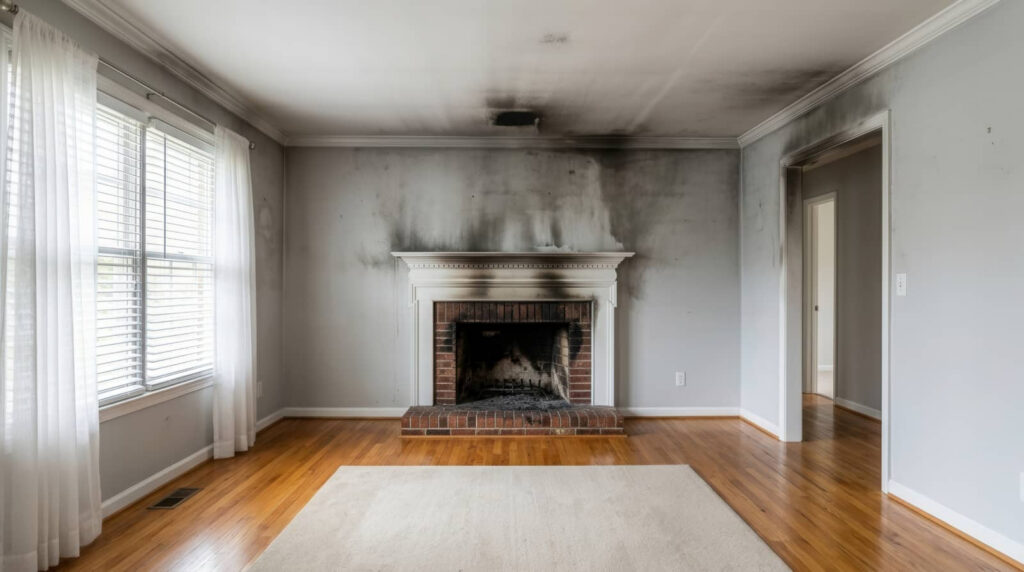
After a small kitchen fire, you may see gray film on the ceiling and yellow streaks on the walls. Smoke damage on walls and ceilings can worsen if soot is left untreated, so assess the buildup, vacuum loose residue, and wash surfaces with a mild detergent before stains set. If odors linger or discoloration keeps bleeding through, you may need to seal and repaint the damaged areas. Knowing when cleaning stops being enough can change the outcome.
Key Takeaways
- Smoke damage shows gray film, soot, yellowing, and lingering odor on walls, ceilings, and nearby porous materials.
- Start cleanup by vacuuming loose soot with a HEPA filter or using a dry cleaning sponge.
- Wash surfaces with mild detergent or TSP, cleaning bottom to top, rinsing each section, and drying completely.
- Repaint with stain-blocking primer if stains or smoke odor remain after cleaning.
- Replace damaged drywall or call professionals if soot, odor, or hidden damage extends into insulation, HVAC, or attic spaces.
What Smoke Damage Leaves on Walls and Ceilings
Smoke damage can leave more than just a visible stain on walls and ceilings. You may notice smoke damage on walls and ceilings as gray film, yellowing, or dark soot accumulation along upper edges, trim, and corners.
Heat-driven particles cling to paint, drywall, plaster, and textured finishes, creating a residue that can spread beyond the fire source. You’ll also detect persistent odor because microscopic compounds settle into porous materials and HVAC pathways.
In some cases, the surface coating dulls or discolors, and fine particulates track along airflow patterns. When you inspect your space, look for uneven staining, powdery deposits, and soft spots that suggest deeper impact.
These signs tell you whether simple surface care, sealing, or repair may be needed so your home feels safe and included again.
Clean Smoke Stains on Walls and Ceilings
Start by vacuuming loose soot with a HEPA filter.
Then wash walls and ceilings with a mild detergent or trisodium phosphate solution, working from the bottom up to avoid streaking.
Rinse each section with clean water and repeat as needed until the stain lightens, but don’t scrub so hard that you damage the finish.
If discoloration remains after cleaning, repaint with a stain-blocking primer and a durable topcoat to seal the residue and restore the surface.
Surface Cleaning Methods
Before you repaint or reseal, remove loose soot and smoke residue from walls and ceilings with dry cleaning sponges or a vacuum equipped with a brush attachment.
Work from the top down so debris doesn’t settle on cleaned areas. Hold the vacuum nozzle slightly off the surface, and use light, overlapping passes to protect paint and drywall.
For painted surfaces, choose a mild detergent solution and a soft microfiber cloth, then wipe in straight lines with minimal pressure. Rinse cloths often so you don’t spread residue.
If you’re part of a cleanup team, keep each person on a defined section to maintain control and consistency.
Dry the area with clean towels or airflow, because trapped moisture can weaken finishes and leave your space feeling unfinished.
Stain Removal Steps
To remove stubborn smoke stains, test a small hidden area first. Then apply a suitable cleaner with a microfiber cloth, soft sponge, or nonabrasive pad. Work in small sections, and wipe gently so you don’t spread residue or mar the finish.
Rinse the area with clean water and dry it right away with a lint-free towel. Repeat the process if faint discoloration remains, but avoid over-wetting the surface. Use consistent pressure, follow the product directions, and keep your movements smooth.
You’re not dealing with this alone; careful steps help you protect your space and restore a cleaner look.
- Feel calmer when stains begin to lift
- Keep control with methodical strokes
- Protect your surfaces from extra wear
- Support a fresher, more welcoming room
- Build confidence with each clean section
When Repainting Helps
When smoke stains have soaked into paint or left a yellow-gray cast after cleaning, repainting can be the most effective fix for walls and ceilings.
You should repaint when residue keeps bleeding through, gloss looks uneven, or the surface still smells smoky after washing and drying.
Before you paint, clean the area, let it fully dry, and apply a stain-blocking primer that seals soot and odor.
Then use a finish that matches the room’s sheen for a consistent result. If you skip primer, stains can reappear.
Check for loose paint, water damage, or cracked drywall first, because those issues need repair before coating.
Repainting helps restore a clean, healthy-looking space you can feel confident living in again.
Remove Smoke Soot and Odor
Start by removing loose smoke soot from walls and ceilings with a dry sponge, microfiber cloth, or vacuum fitted with a soft brush attachment.
Then wash the surface with warm water and a small amount of mild detergent, working from the bottom up to limit streaking. Rinse with clean water and dry the area with a lint-free cloth.
To reduce odor, ventilate the room well and place activated charcoal or baking soda nearby.
Repeat cleaning as needed until residue no longer transfers to your cloth. You’re not handling this alone; each careful pass helps restore comfort and confidence in your space.
- Less soot means fewer reminders of the fire
- Fresh air helps your rooms feel livable again
- Clean surfaces support a calmer home
- Small steps build real progress
- Your space can feel like yours again
When to Seal Smoke-Damaged Surfaces
If soot still bleeds through after cleaning, the surface may need to be sealed before repainting. You should seal when stains remain, when odors persist, or when porous materials keep releasing residue.
Use a stain-blocking primer rated for smoke damage, and apply it only after the wall or ceiling is fully dry and free of loose soot. Test a small area first; if discoloration returns, proceed with full sealing.
Keep the room ventilated, wear gloves and a respirator, and mask adjacent clean surfaces. You’re protecting your space and helping your home feel clean again.
Don’t seal over damp, chalky, or flaking areas, because the coating won’t bond properly. If the damage is heavy or widespread, bring in a restoration professional before you paint.
Repair Paint, Drywall, and Ceilings
You can spot-repair paint where smoke staining is limited, but match the finish and feather the edges to avoid visible patch lines.
Check drywall for soft spots, crumbling areas, or deep soot penetration, and replace sections when cleaning and sealing won’t restore integrity.
Seal ceiling stains before repainting so bleed-through doesn’t return after the finish coat.
Spot Repairing Paint
When smoke damage has stained or dulled the finish on walls, ceilings, or drywall, spot repairing the paint can restore appearance after cleaning and surface prep.
You should lightly sand the repaired area, feathering edges so the patch blends into the surrounding finish. Prime the bare or sealed spot with a stain-blocking primer, then let it dry fully.
Match sheen, color, and application method before you touch up with a small brush or roller. Build coverage in thin coats to avoid flashing and lap marks.
- You regain a clean, unified room
- You avoid obvious patch lines
- You protect the surface from bleed-through
- You restore confidence in your space
- You feel back at home again
Drywall Replacement Signs
Replace drywall rather than repaint it when smoke damage has penetrated the surface, caused swelling, softened paper, or left stains that keep bleeding through primer and paint.
You should also replace panels that feel crumbling, delaminate at seams, or show persistent odor after cleaning. If you press the wall and it flexes, the core may be compromised.
Cut back to sound material, expose all damaged edges, and inspect framing for hidden residue. Match the new board thickness to the existing wall so you keep a uniform finish.
If the damage reaches multiple sections, replace them together to avoid patchwork results. You’re not overreacting; you’re choosing a durable repair that helps your room look right and perform well again.
Ceiling Stain Sealing
If smoke stains keep showing through after cleaning, seal the ceiling before repainting so the discoloration doesn’t telegraph back through the finish.
You’ll use a stain-blocking primer or shellac sealer to lock in soot and tar residues, then let it cure fully before topcoating.
Lightly sand glossy spots, remove dust, and patch any pinholes so the seal coats evenly. For textured ceilings, spray the primer to reach valleys and edges.
- You protect your work from yellow bleed-through.
- You restore a clean, uniform surface for everyone to see.
- You avoid repeated repainting and wasted supplies.
- You reduce lingering smoke odor trapped in porous drywall.
- You bring your room back to a space that feels like home.
After sealing, inspect under bright light before painting.
When to Call a Smoke Damage Pro
Call a smoke damage pro when the staining, residue, or odor on your walls and ceilings goes beyond surface cleaning. You should also call one if soot has spread into insulation, attic spaces, HVAC vents, or porous drywall.
When smoke from fire, candles, or cooking leaves greasy films that keep returning after cleaning, you need specialized extraction, sealing, and deodorization.
If you see blistered paint, warped drywall, or moisture from firefighting, ask for an inspection before you repaint. A pro can test residue, set containment, and choose the right cleaners for painted, textured, or unfinished surfaces.
Acting early helps you protect your home, avoid hidden damage, and feel confident your space is truly clean again.
Frequently Asked Questions
How Soon Should Smoke Damage Be Cleaned After a Fire?
You should clean smoke damage immediately, ideally within hours after the fire. You’ll reduce staining, odor, and corrosion by starting fast, wearing protection, and ventilating first; don’t wait, because residue bonds quickly.
Can Smoke Damage Affect Indoor Air Quality Long-Term?
Yes—smoke damage can linger in your indoor air like an uninvited guest. You’ll breathe trapped particulates and VOCs unless you clean, ventilate, and seal surfaces promptly; lingering odors often signal ongoing contamination.
What Household Products Worsen Smoke Stains on Painted Surfaces?
You’ll worsen smoke stains with ammonia, bleach, vinegar, abrasive powders, and oily soaps; they can smear residue or dull paint. Use a mild degreaser, test first, and dry surfaces quickly to protect your home.
Does Insurance Usually Cover Smoke Cleanup on Walls and Ceilings?
Usually, yes, if you’ve got covered fire or smoke damage. You should review your policy, document stains and odor, and file promptly. You may need an adjuster to confirm cleanup, sealing, or repainting costs.
How Can I Tell if Smoke Odor Is Trapped Inside Insulation?
You can smell it most strongly near outlets, attic hatches, or warm walls. Use a moisture meter and inspect for persistent odor after cleaning; if it remains, the insulation’s likely trapped smoke and needs removal.
Conclusion
When you tackle smoke damage quickly, you stop a thin gray veil from hardening into a permanent scar. You’ve learned to vacuum soot, wash surfaces, seal stains, and repaint where needed. If odors linger or drywall is deeply damaged, don’t wait; bring in a pro. Think of cleanup as resetting the room’s lungs and skin—clear, sealed, and breathing clean again. Early action keeps hidden residue from spreading and restores safety, comfort, and value.